
Since 2026, the global transformer industry has witnessed explosive growth. China, leveraging its full industrial chain advantages, technological breakthroughs, and efficient delivery capabilities, has become the core supplier in the global market. Its products are exported to regions such as Europe, North America, and Southeast Asia. The export orders have been queued up until 2028, and the industry's prosperity continues to rise. Global Times.
Currently, the global energy transition and AI computing power construction form dual core driving forces. Domestic "15th Five-Year Plan" power grid investment has fully kicked off, and cross-regional transmission projects of ultra-high voltage are advancing steadily. The construction of new infrastructure such as energy storage stations and park micro-grids is accelerating. This directly drives the batch signing and production of high-voltage and super-large transformers. At the same time, global AI data center construction has exploded, with the power per cabinet soaring from traditional 5 kilowatts to 100 kilowatts, leading to an exponential increase in the demand for high-power, low-loss, and stable dry-type transformers.
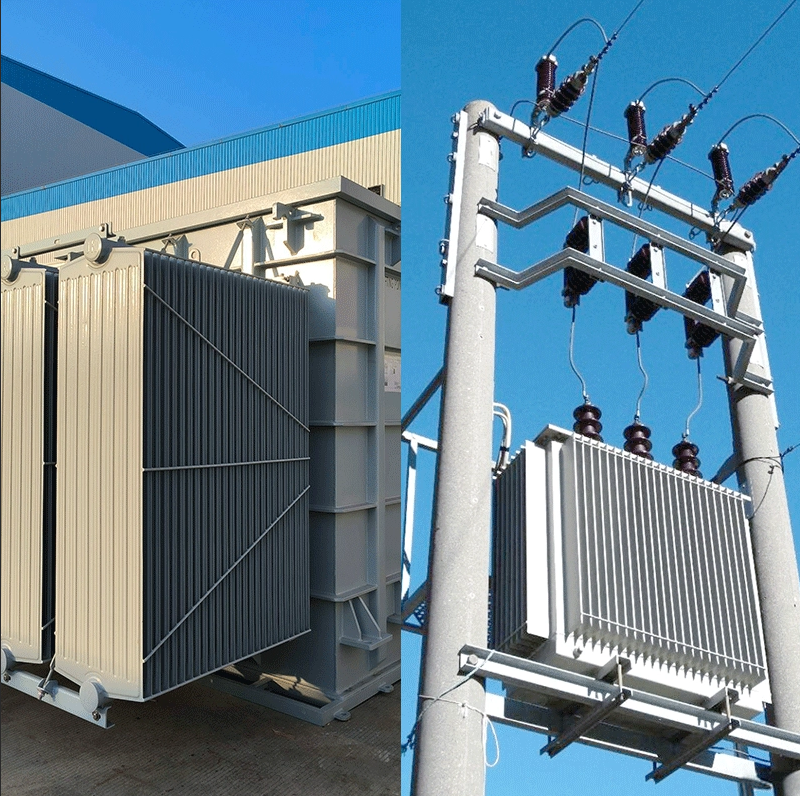
By 2025, the proportion of domestic high-end transformer orders related to computing power has exceeded 35%. In the overseas market, the European energy transition, the US $75 billion power grid expansion plan, and the demand for upgrading old power grids have been released simultaneously. The global average price of transformers has risen by over 60% year-on-year, and the delivery cycle has extended from 30-60 weeks to 115-130 weeks. Some large products even require a waiting period of 4 years.
Chinese transformer enterprises have seized the global market with significant advantages. In terms of technology, domestic leading enterprises have been deeply engaged in the ultra-high voltage field for many years, mastering core technologies such as insulation design and withstand voltage treatment, and successfully developing the world's first 500 kilovolt vegetable oil transformer, filling the international gap in high-voltage-level environmentally friendly transformers. The product can reduce carbon emissions by 72.8 tons and improve the adaptability to extreme weather by 15°C.
In terms of delivery efficiency, China has 60% of the global production capacity, and regular orders can be delivered within 10-12 months, while emergency orders can be compressed to within 8 months, only one-fifth of the cycle of European and American manufacturers. In 2025, China's transformer export total value reached 64.6 billion yuan, increasing by 36% year-on-year. In the first two months of 2026, the export growth rate further increased to 61%, and the export to the European market increased by 88.1% year-on-year.
Greening and intelligence have become the core directions of industry upgrading. From the policy side, China is accelerating the elimination of high-energy-consuming outdated equipment, and the proportion of first-level energy efficiency and ultra-low loss transformers in procurement has continued to increase, forcing enterprises to optimize their production capacity structure. From the technical side, natural ester insulating oil and new composite materials are widely used, and the proportion of environmentally friendly insulating transformers has steadily increased; the penetration rate of intelligent transformers exceeds 35%, with functions such as real-time parameter monitoring, fault warning, and remote control, suitable for the construction of smart grids. At the same time, solid-state transformers are gradually emerging from the laboratory and accelerating their commercialization process, and will become the core direction of industry technological innovation in the future.
Industry insiders analyze that in the short term, the global supply-demand imbalance pattern is difficult to alleviate, and China's transformer export advantages will continue to be consolidated; in the long term, as the industry's chain matures and technology iterates, it will undergo a deep transformation towards green and low-carbon, intelligent and efficient. However, it is necessary to note that global trade barriers, fluctuations in raw material prices, and the shortage of high-end talents still need to be addressed. In the future, domestic enterprises need to continuously increase R&D investment, strengthen intelligent manufacturing capabilities, and consolidate global market share while promoting China's transformation from a transformer manufacturing giant to a technology powerhouse.